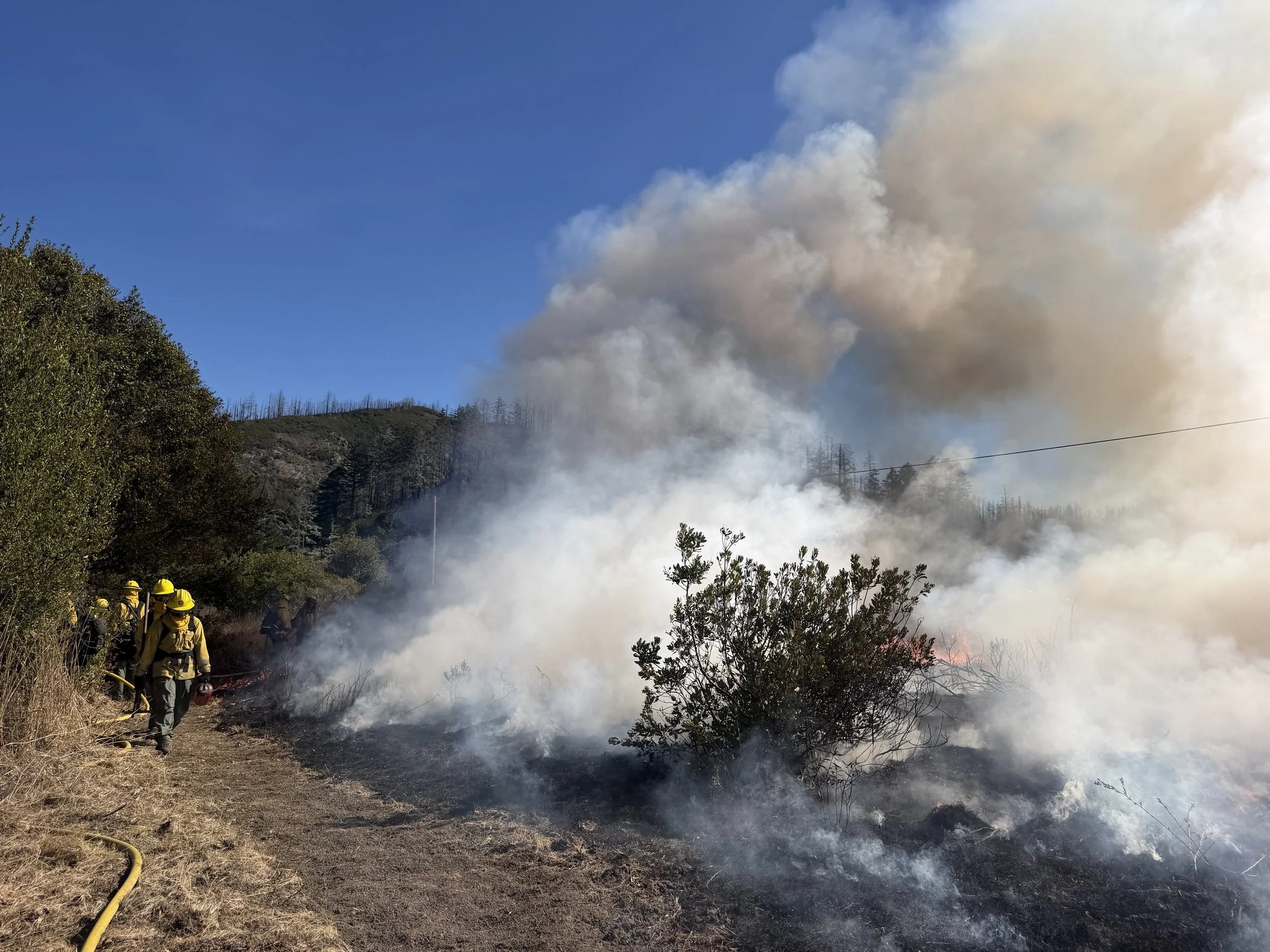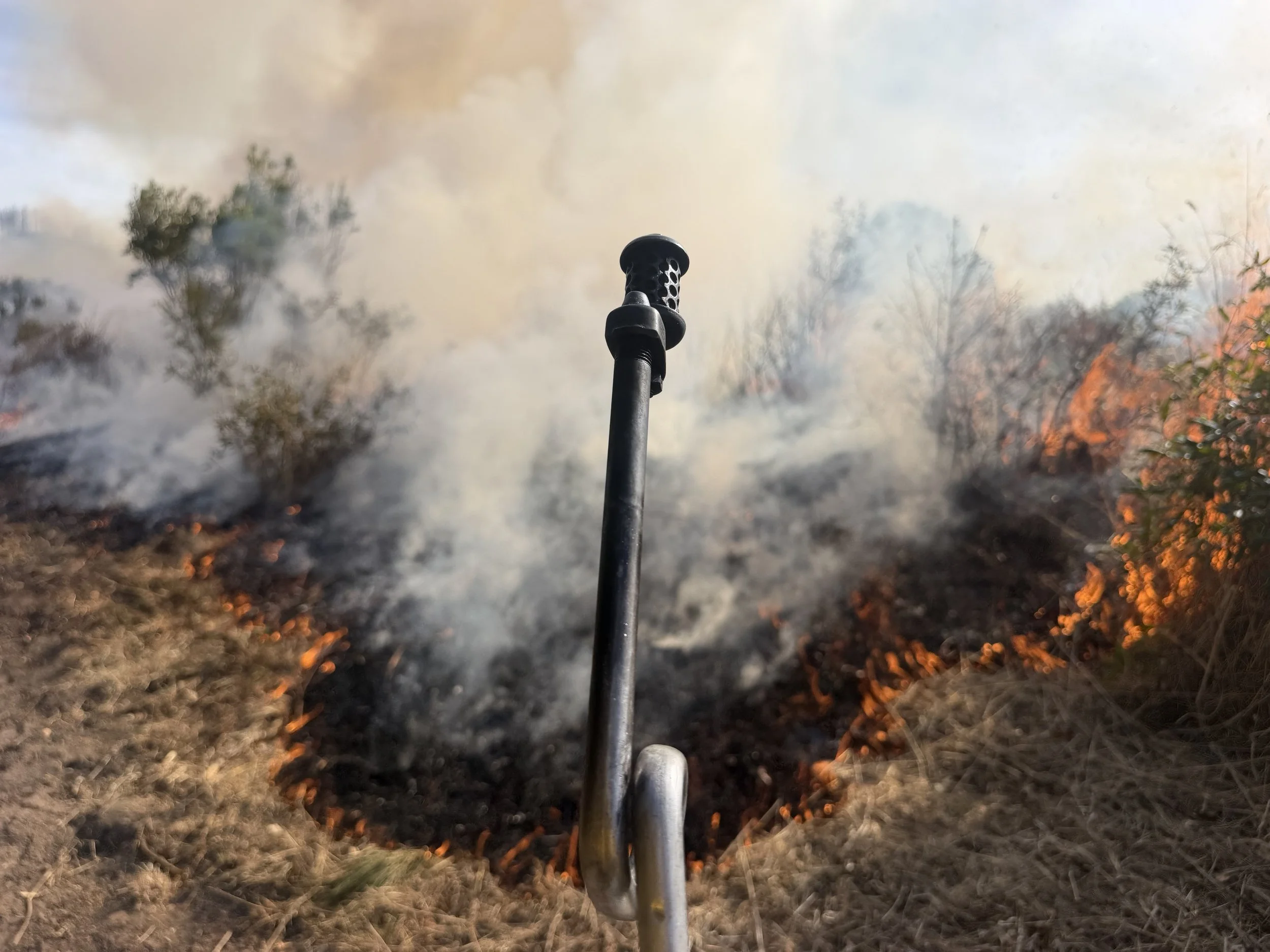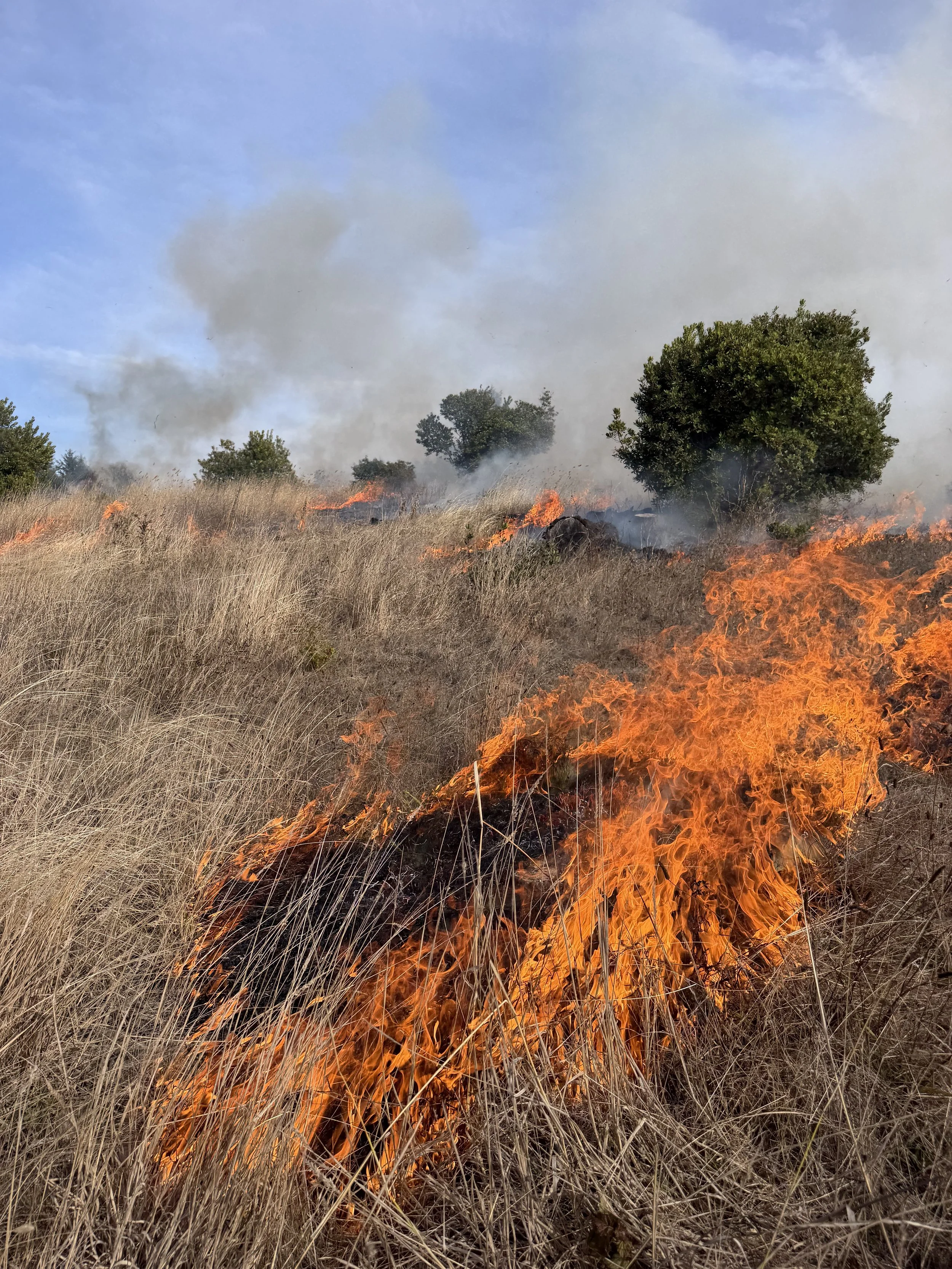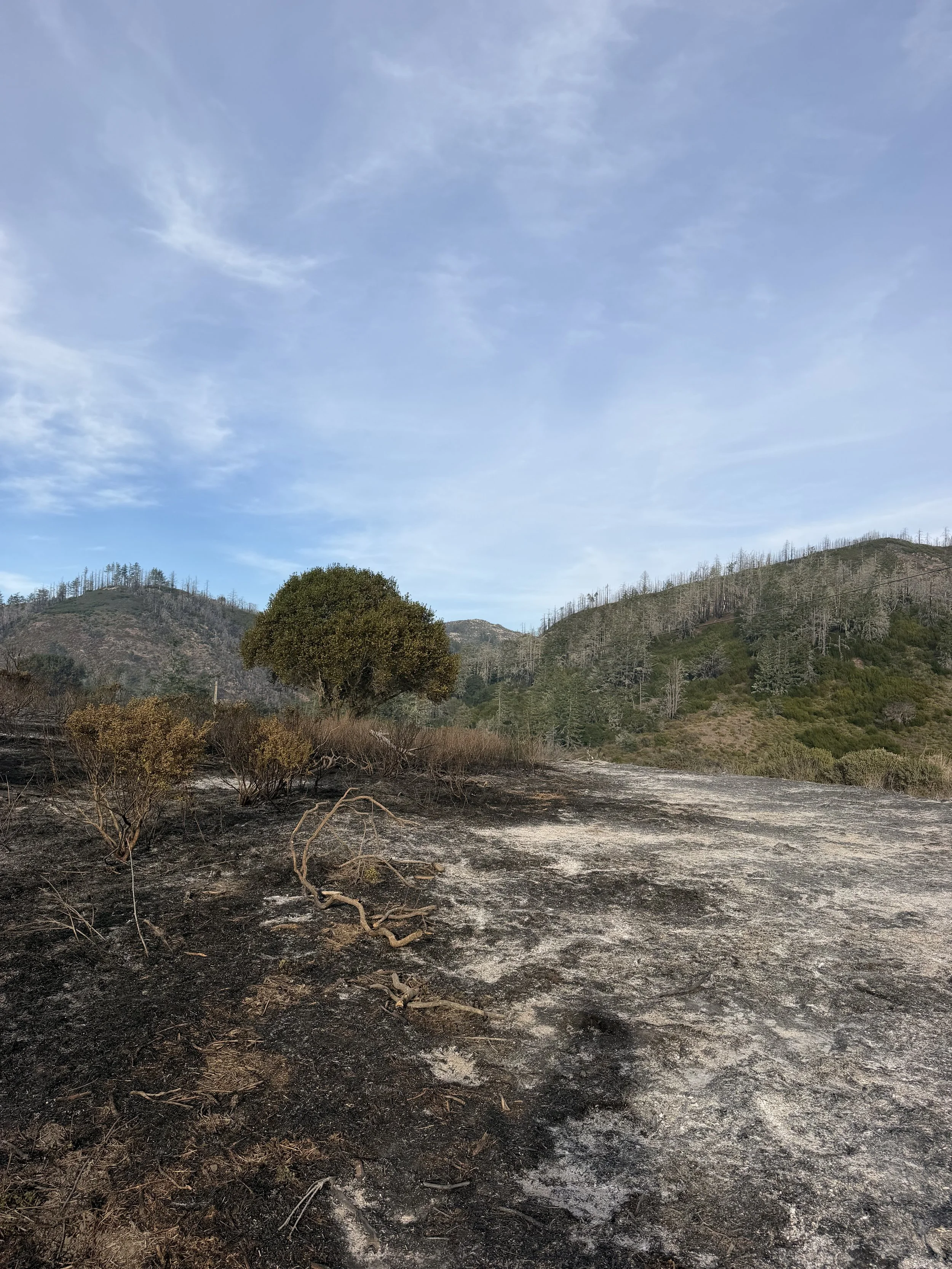
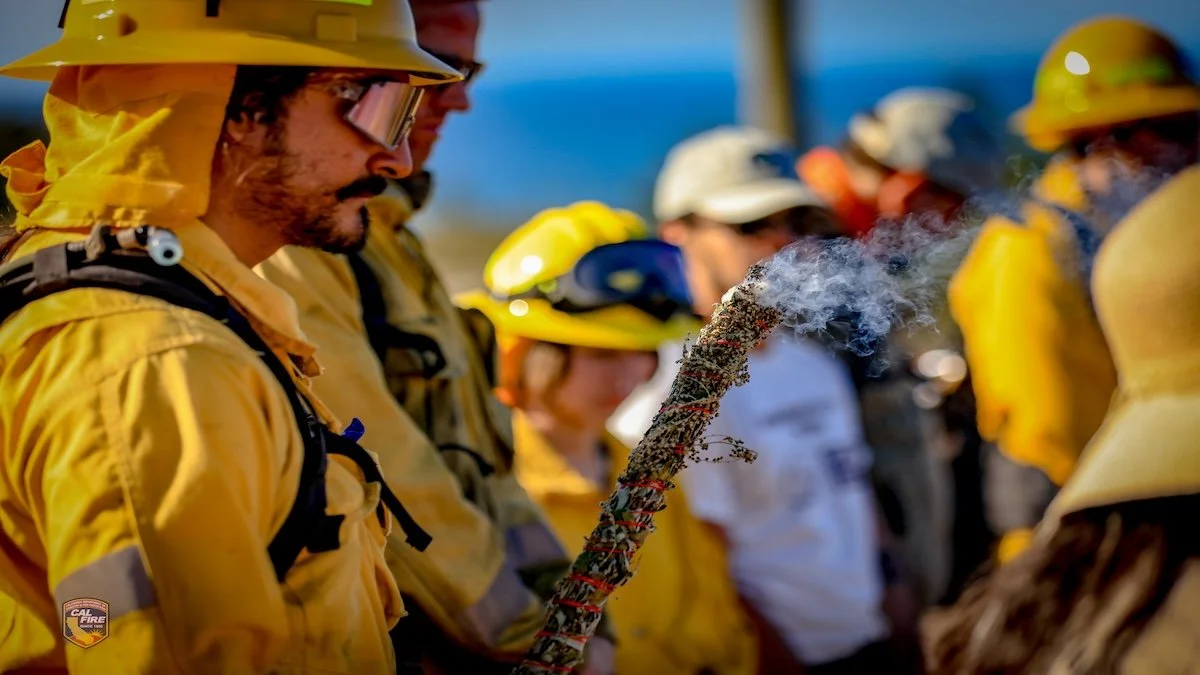
Photo Credit: CalFire
Prescribed Fire at Año Nuevo State Park
Esak
I've worked in Quiroste Valley since 2018 through AMLT’s summer internships. They were one- to two-month programs, and back then we were doing full-scale fuel reduction for coastal fire restoration, trying to reduce Douglas firs and woody encroachers on the historical coastal prairie. The encroachers used to carpet the entire Central coastline, and we wanted to reduce it to 3 to 5% coverage. It was important to me to spend the first couple of years learning why we're out there: the historical presence of grasses, the native razor grass, waterfowl, birds, predators in that area, etc. It all provided context.
Later, I began working full-time, and by then I was ready to become fire trained. The previous Stewardship Corps had already received their training, so I learned from their experience doing burn piles, where we burned off excess material for fuel or wood in preparation for this large-scale broadscape that took a lot of coordination. Thankfully, because of what was, at the time, a Governor's exemption, we were able to expedite the process and organize this burn faster than it otherwise would have taken.
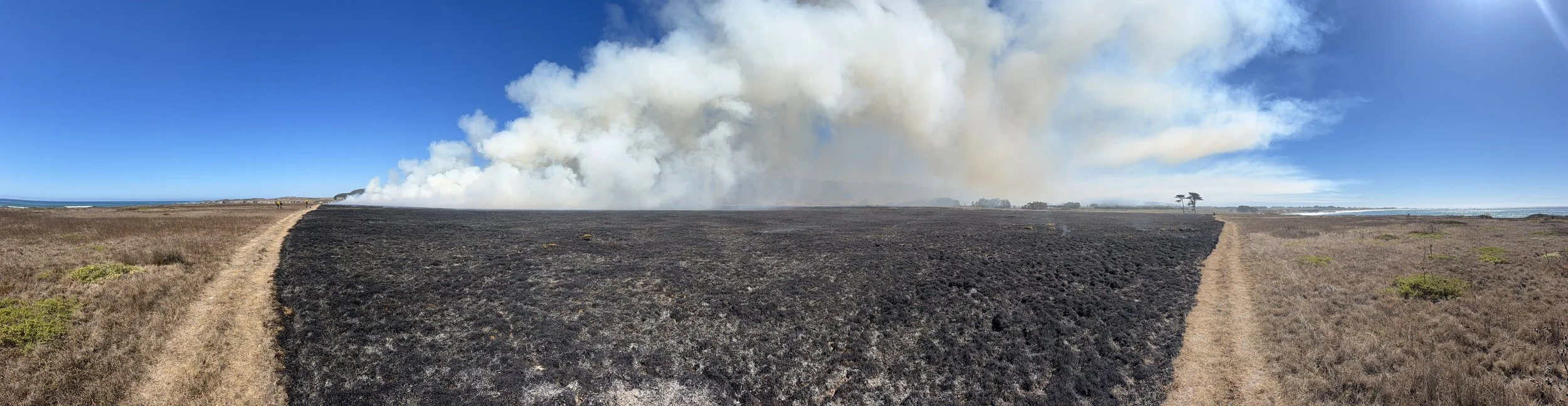
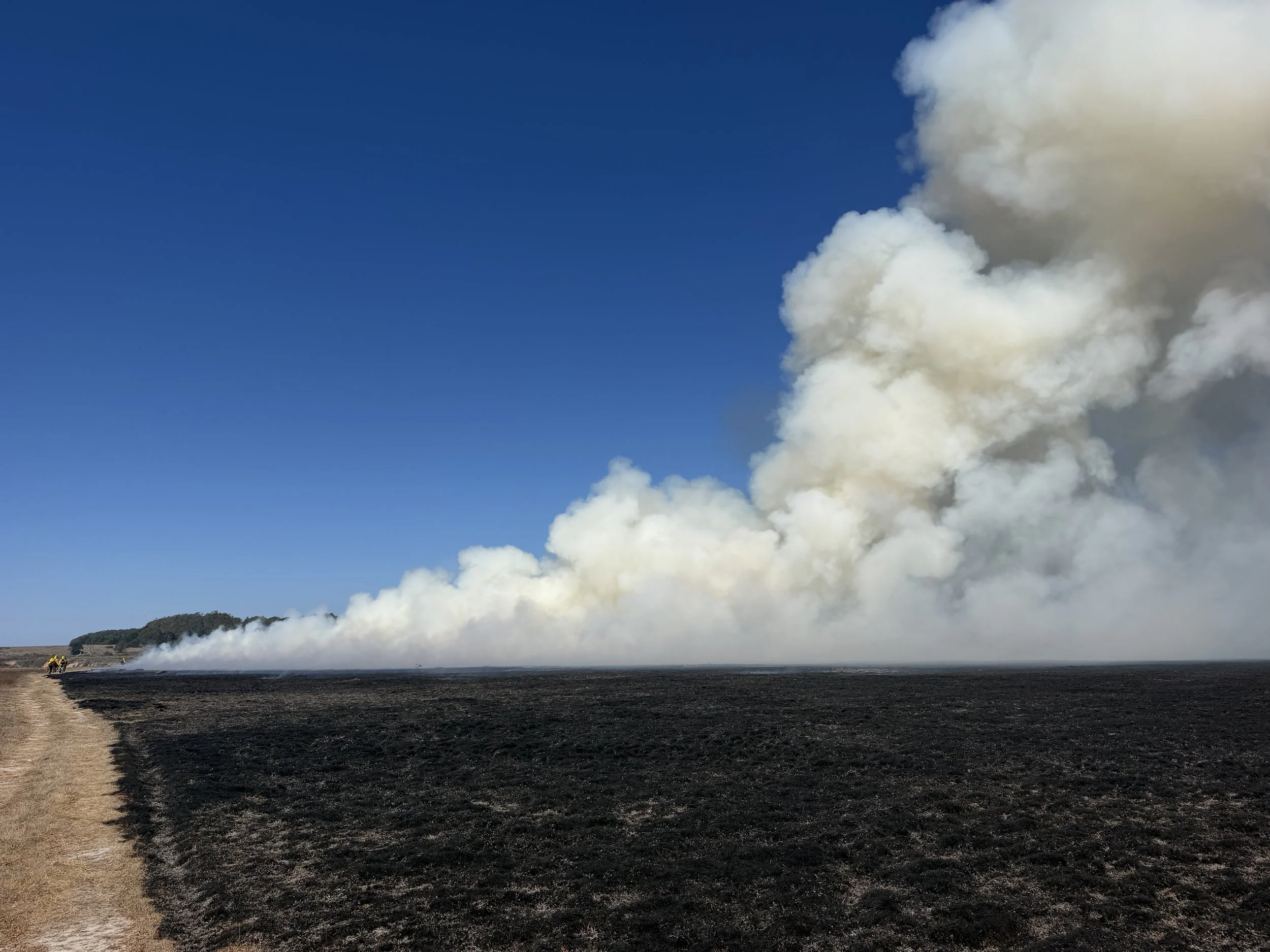
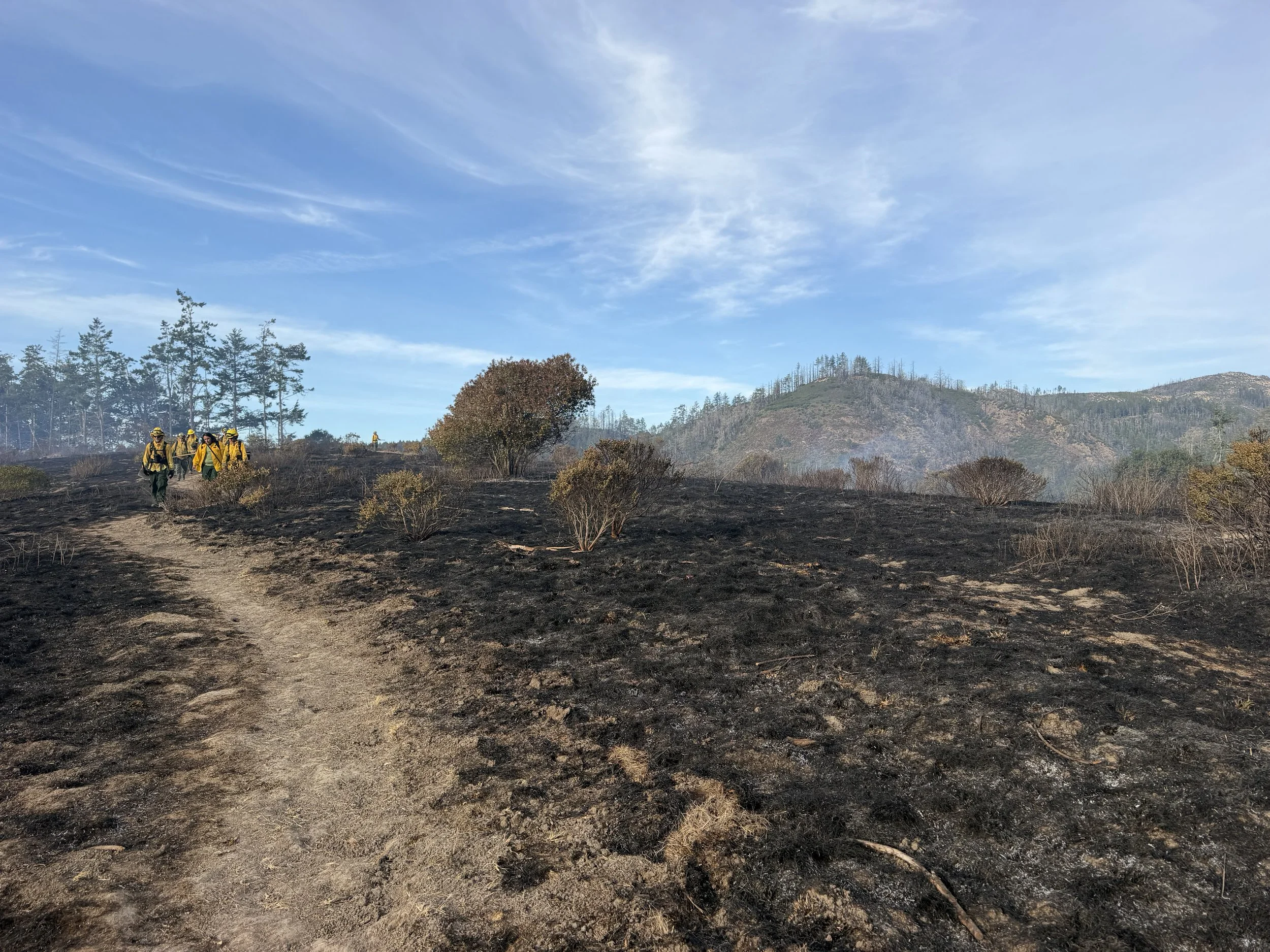
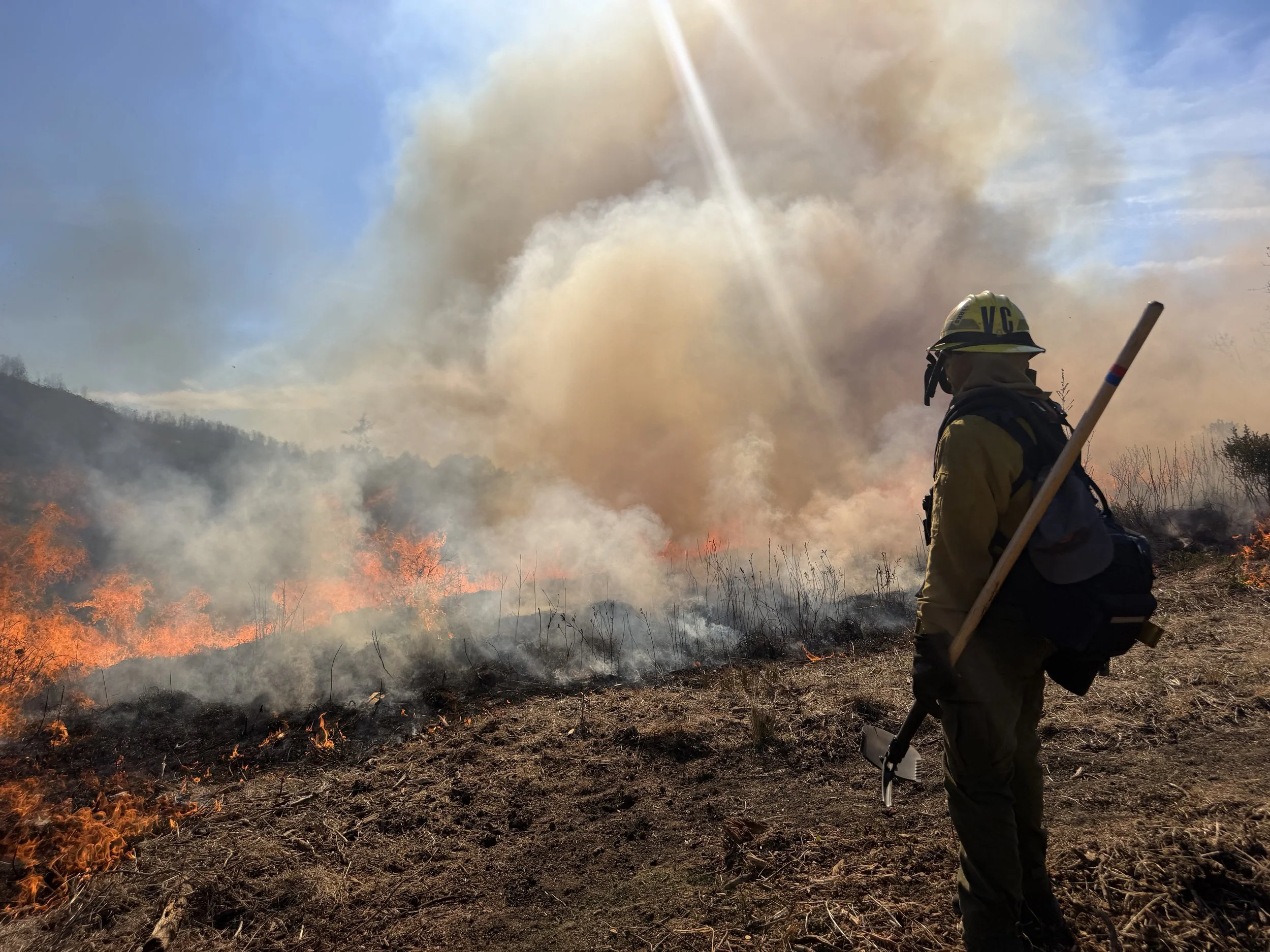
Then about 2 years ago, I started working with Jared Childress of the Central Coast Prescribed Burn Association (CCPBA), and he mentored me on writing a burn plan specific to the Quiroste Valley. Since then, they've used it as a draft, revised it, involved CalFire, and finally aligned the framework. We implemented the current plan just a few weeks ago on a 14-acre coastal prairie burn. The landscape involved chaparral and soybean vegetation, and the full purpose of it was to have moderate fire severity and intensity - to extinguish or fully kill out some of the woody encroachers, an inversion process that you see in the grasslands. Without human intervention, you go from open grassland to woody vegetation like shrubs, and this burn stops the process that heightens the danger natural fire creates.
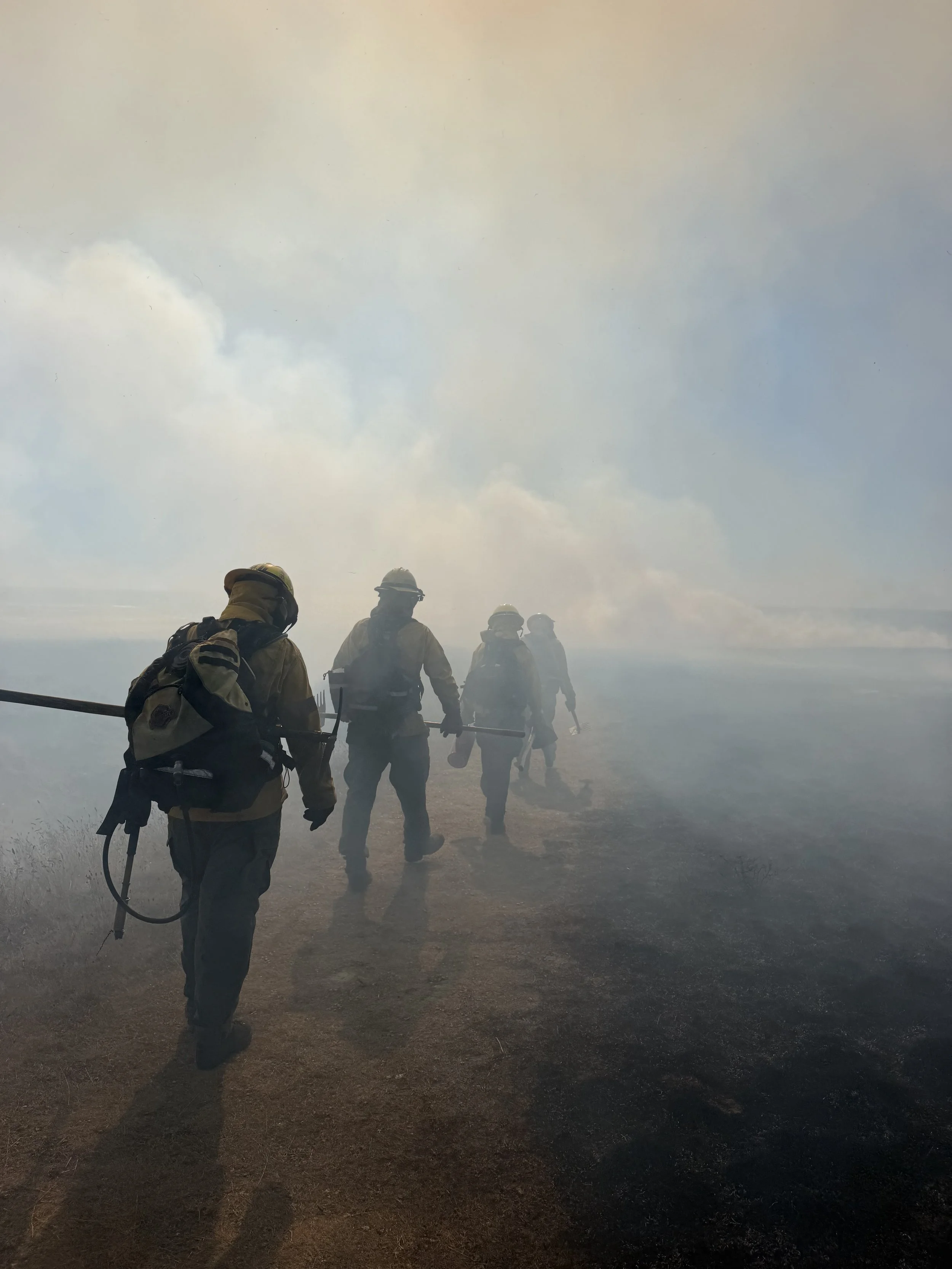
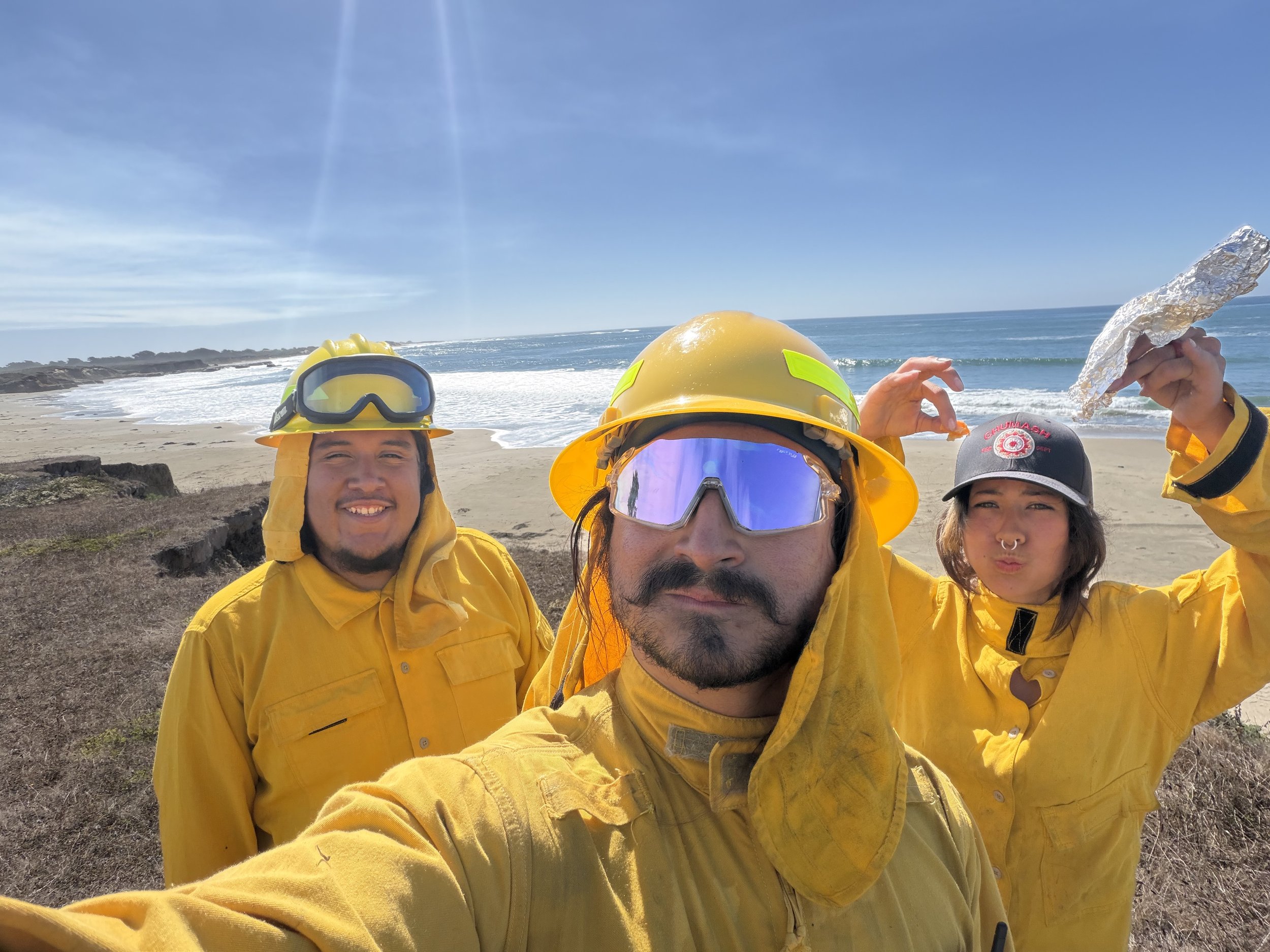
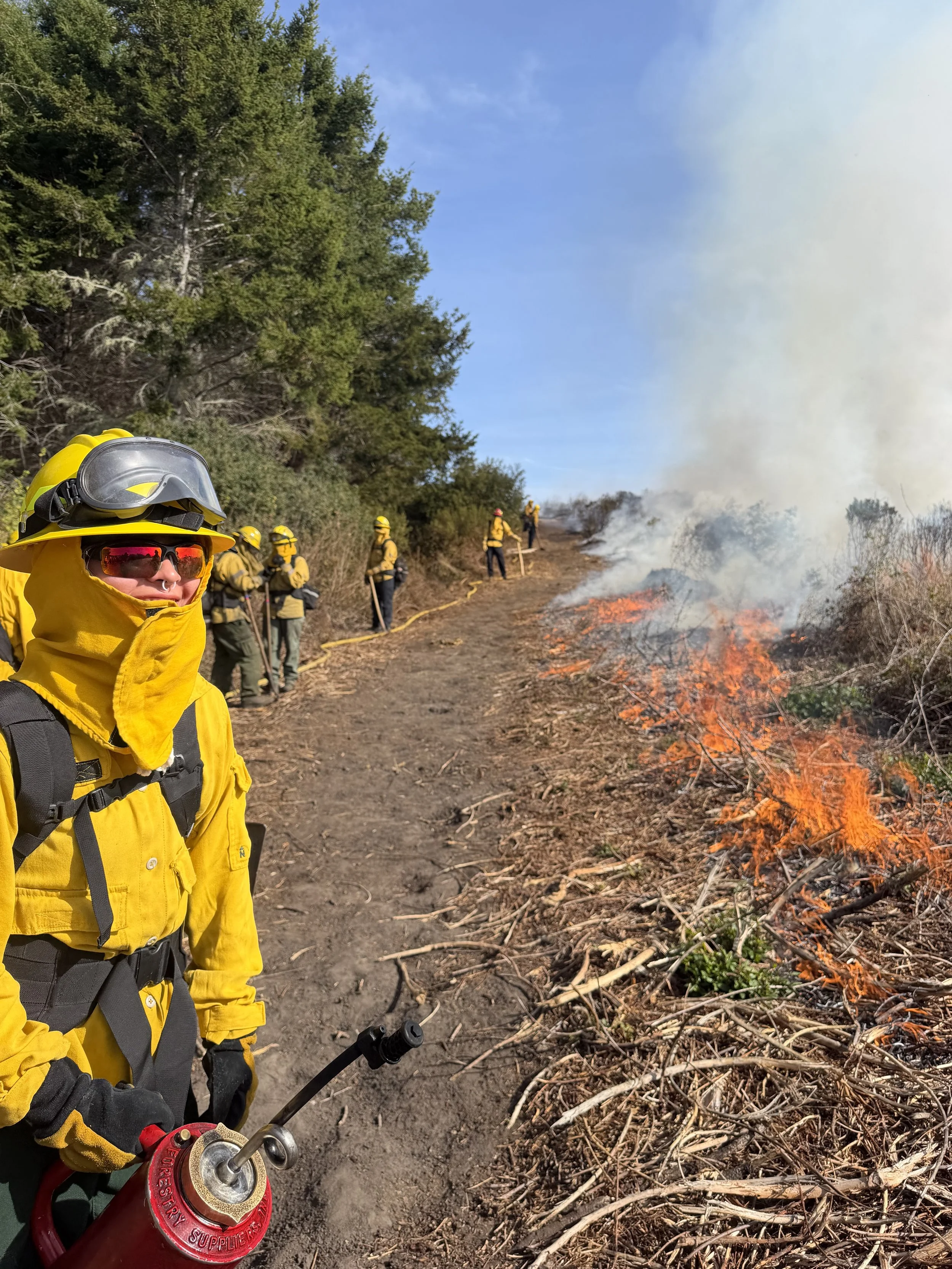
Being part of the new Stewardship Corps, working with my brother and some new cousins who hadn't had a chance to see live fire in that part of the valley floor, was a special experience. They were really excited. We worked very closely with State Parks a few months prior to implement a handline across roughly 90% of the entire area - an approximately 14-acre perimeter - which is fairly extensive. We worked around that perimeter as well, reducing some of the taller ladder fuels to make sure the fuel height or fire length isn't taller than us, making it manageable on the edge. It was just really impressive to see it all kind of come together. Cal Fire was also considerate in taking a backseat, watching us, and guiding us as needed.
In recent years, there's been an evolving partnership where, in the past, Cal Fire dictated that we need to have bulldozer-controlled lines, the most cautious of cautious methods. After years of discussion, we’ve agreed that we can set parameters and bring in the more cultural element of traditional fire prevention. As State Parks says, our best defense is a well-written fire execution plan, not setting walls of fire beyond your control. We’ve created a plan to manage everything so we can burn effectively at low temperatures and do so in an ecologically responsible way.
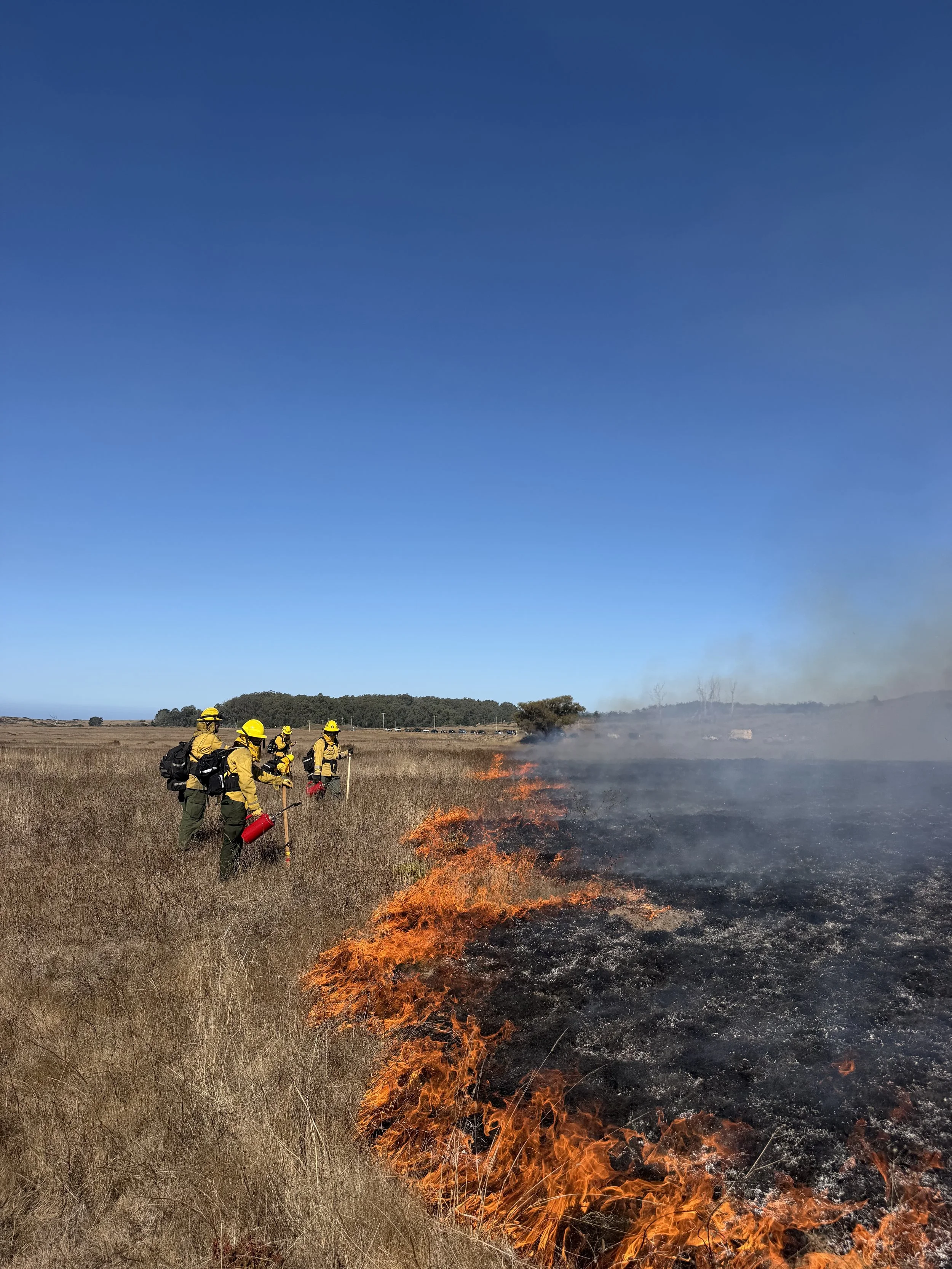
The ignition plan was to have a backing fire, which is when the wind pushes and drives the fire into itself - using nature to contain the flame. It creates more resistance and more time for the fire to fully cook through the vegetation. Head fires are considered flashier, so they run fast on the ground, but they don't fully burn everything through. We wanted a consistent, moderate-intensity load with the right backing fire, promoting healing to the land.
History and Cultural Learning
We’ve learned about our history too throughout this process. We were taught that in 1769, a Spanish expedition made the first land expedition along California's Central Coast from Baja, trying to reach Monterey Bay. Essentially, the fleet overshot the Bay and ended up far to the north, in what is now Año Nuevo State Park in the Quiroste Valley Cultural Preserve. They were very malnourished and on the brink of mutiny, with priests administering last rites. There they encountered a village known as Mittene on the valley floor, just a bit lower than where we burned. That area is significant because the Quiroste people there were a politically powerful tribe; they had a large roundhouse that could easily fit about 200 native people. Most significantly, they had an abundance of Olivella shells created by the rock features on the coastlines. They had an ancient form of banking, distributing shell currency through trade networks, which gave them great political power until the Spanish period. It is also argued that without the aid of the Quiroste people, expeditioners may not have made it to San Francisco, or would have been significantly delayed.
As there are no known descendants of the Quiroste people, we have accepted the responsibility of working the land there in honor of those people and our shared history.
Zechariah
I want to emphasize that this was a long-term vision and goal of the Amah Mustun Tribal Band and former Chairman Valentin Lopez. They began doing research in 2008-2010. From that research, they developed the goal and vision to bring fire back to that landscape, alongside the archaeology research happening at the time.
The fact that we can do this now is significant; it shows that, as Indigenous people, we're still here. We're still putting fire on the land - land that hasn't gotten fire in hundreds of years. I thought that was pretty spectacular. Being part of this long-term vision has been truly impactful!